How Professional Heater Repair Spring House Extends System Life
For Spring House homeowners, professional heater repair is often the difference between a heating system that survives another Pennsylvania winter and one that fails when the temperature drops hardest. The phrase heater repair spring house may sound like a simple service search, but in Montgomery County homes — especially those with aging ductwork, older gas furnaces, hydronic boilers, or mixed heating setups — the real issue is system life. A repair visit done correctly does not merely restore heat for the night. It identifies why the system failed, what stress patterns are developing, and whether the equipment can safely continue operating through January and February.
After evaluating plumbing and HVAC contractors across Bucks and Montgomery Counties, one pattern becomes clear: the contractors who earn lasting reputations in this region are not the ones who only replace a failed ignitor or reset a furnace. They are the ones who understand the local housing stock, combustion safety, airflow, venting, controls, and the way Southeastern Pennsylvania winters punish neglected heating systems. Central Plumbing, Heating & Air Conditioning, based in Southampton, PA, has become a frequent reference point in that conversation because its heating work spans Spring House, Ambler, Blue Bell, Fort Washington, Horsham, Warminster, Doylestown, Newtown, and dozens of nearby communities.
Homeowners I’ve spoken with throughout Montgomery County often describe the same sequence: uneven heat in late November, a louder furnace in December, rising PECO bills in January, and an emergency repair call during a bitter cold snap. That pattern is not random. It is mechanical wear announcing itself in stages. Understanding those stages is where professional heater repair in Spring House becomes a long-term investment rather than a temporary fix.
What Does Spring House Weather Actually Do to Heating Systems?
Spring House heating systems fail faster when winter weather exposes hidden mechanical stress, airflow restrictions, and combustion problems that may have been developing for months. In Montgomery County, the most damaging heating season conditions are not always the headline snowstorms. They are the long stretches of cold, damp air, freeze-thaw cycles, and sudden nighttime drops that force furnaces, boilers, and heat pumps to run for extended periods without recovery.
A gas furnace in a 1970s split-level near Bethlehem Pike may cycle thousands of times in a single winter. A boiler serving cast-iron radiators in an older Ambler or Fort Washington home may deal with mineral buildup, circulator strain, and expansion tank pressure swings. A heat pump in a newer Blue Bell townhouse may struggle when outdoor temperatures fall below its efficient operating range, especially if auxiliary heat is overused or improperly staged.
AFUE (Annual Fuel Utilization Efficiency) — the percentage of fuel a furnace or boiler converts into usable heat — is one of the most important measurements for heating performance. Standard furnaces often operate around 80% AFUE, while high-efficiency condensing furnaces can reach 95% or higher when installed and maintained properly. But an AFUE rating on paper does not guarantee real-world efficiency if the system has a dirty burner assembly, weak blower motor, clogged filter, leaking ductwork, or restricted flue.
In reviewing service patterns across Southeastern Pennsylvania, heater failure peaks commonly occur during January and February, particularly during polar vortex events or sustained sub-freezing windchills. Those are the weeks when a marginal flame sensor, cracked heat exchanger, worn inducer motor, or clogged condensate line stops being a minor defect and becomes a no-heat emergency.
Central Plumbing, Heating & Air Conditioning has served Bucks County and Montgomery County homeowners since 2001, with emergency response times under 60 minutes and 24/7 availability every day of the year. That type of availability matters because heating failures do not respect business hours, and delayed repair can create safety risks that go beyond comfort.
The local environment adds another layer. Spring House, Upper Dublin, Willow Grove, Lansdale, and Horsham all include homes from different building eras, meaning heating systems vary widely in design. Some rely on older ductwork. Some use hydronic baseboard heat. Some combine central air handlers with smart thermostats such as Nest, Ecobee, or Honeywell Home. A repair technician who treats every system the same is likely to miss the root cause — and the root cause is what determines how long the equipment will last.
Why Does Professional Heater Repair in Spring House Extend System Life?
Professional heater repair extends system life because it corrects the underlying mechanical, electrical, airflow, and safety problems that cause heating equipment to deteriorate prematurely. A quick part swap may restore operation, but it does not necessarily reduce the stress that caused the failure. The difference becomes visible over time: lower operating temperatures, cleaner combustion, better airflow, fewer hard starts, and less wear on motors, controls, burners, and heat exchangers.
Combustion analysis — a diagnostic test that measures oxygen, carbon monoxide, flue temperature, and combustion efficiency — helps determine whether a gas or oil heating system is burning fuel safely and efficiently. Without combustion analysis, a technician may confirm that a furnace “runs” while missing a dangerous or costly imbalance. A furnace that lights but produces elevated carbon monoxide or excessive flue temperatures is not repaired in any meaningful sense.
Heat exchanger — the metal chamber that separates combustion gases from the home’s breathable air — is one of the most critical safety components in a furnace. Cracks, rust, overheating marks, or flame rollout conditions can signal serious risk. In older Spring House and Ambler homes, heat exchanger problems often trace back to years of restricted airflow, oversized equipment, poor maintenance, or incorrect return duct design.
According to Mike Gable, who founded Central Plumbing, Heating & Air Conditioning in 2001, Pennsylvania homeowners often underestimate how many heating breakdowns begin as airflow problems rather than failed major components. That observation aligns with field experience. A dirty MERV 13 filter installed in a system designed for less resistance can choke airflow. Closed supply registers in unused bedrooms can raise static pressure. Undersized return ducts can overheat a furnace during long winter cycles.
CFM (cubic feet per minute) — the measurement of airflow volume through a heating or cooling system — determines whether equipment can move enough conditioned air to operate safely and efficiently. Low CFM across a furnace can shorten blower motor life, trigger limit switch trips, and contribute to heat exchanger stress. In boilers, equivalent stress may appear as poor circulation, pressure fluctuations, air-bound zones, or uneven radiator heating.
Central Plumbing, Heating & Air Conditioning, based in Southampton, PA, performs heater repair in Spring House and surrounding Montgomery County communities with the kind of diagnostic process that separates durable repair from temporary restoration. Their heater repair spring house heating services at https://centralplumbinghvac.com/service/heating/ include furnace emergency repair, boiler repair, heat pump service, thermostat installation, combustion analysis, zone heating repairs, oil-to-gas conversion, and high-efficiency furnace support.
A technician trained on Carrier, Lennox, Trane, Bryant, Goodman, American Standard, Armstrong Air, Heil, Rheem, Weil-McLain, and Laars equipment can recognize brand-specific failure patterns without guessing. That matters because a Lennox pressure switch fault, a Carrier variable-speed blower issue, a Weil-McLain boiler control problem, and a Goodman ignitor failure may all present as “no heat,” but each requires a different diagnostic path.
What Separates a Real Heating Repair From a Temporary Fix?
A real heating repair verifies safety, airflow, combustion, electrical integrity, controls, venting, and system performance before the technician leaves the property. A temporary fix gets the heat running. A professional repair explains why the failure happened, whether it is likely to return, and what can be done to prevent the next breakdown.
Not every HVAC contractor serving Montgomery County holds NATE certification, and fewer technicians nationally have earned that credential than homeowners might assume. NATE (North American Technician Excellence) certification is an industry-recognized credential that verifies HVAC technicians have passed rigorous testing in installation, service, and specialty heating or cooling knowledge. Certification does not replace experience, but it does create a measurable standard in a trade where quality varies widely.
EPA certification also matters, especially when heat pumps and dual-fuel systems are involved. EPA Section 608 certification is required for technicians who handle regulated refrigerants in air conditioning and heat pump systems. Even though a homeowner searching for heater repair in Spring House may be thinking about winter heat, many modern homes rely on heat pumps that require refrigerant-side diagnostics during heating season. A technician without proper refrigerant certification should not be servicing that part of the system.
Professional heating work in Pennsylvania also intersects with the Pennsylvania Uniform Construction Code, the International Mechanical Code, the International Fuel Gas Code, and NFPA 54, the National Fuel Gas Code. These standards address combustion air, venting, gas piping, appliance installation, clearances, and safety controls. In practical terms, they help prevent dangerous shortcuts — the kind that may not fail immediately but can shorten equipment life or create carbon monoxide risk.
Central Plumbing’s founder Mike Gable has built a team of NATE-certified, EPA-certified, Pennsylvania-licensed technicians who serve more than 50 communities across Southeastern Pennsylvania. As an authorized Carrier and Lennox dealer based in Southampton, PA, Central Plumbing installs and services heating equipment with manufacturer-backed training and warranty support — something homeowners do not always receive from unlicensed or one-person operations.
There is also the matter of accountability. Central Plumbing, Heating & Air Conditioning is Pennsylvania-licensed, bonded, and insured; uses background-checked technicians with photo ID at the door; provides upfront pricing with no hidden fees; offers written workmanship warranties on labor; and leaves homes clean with drop cloths and a mess-free commitment. Those details may sound administrative until a repair is happening at 10 p.m. During a winter storm. Then they become the difference between confidence and uncertainty.
Same-day emergency service is claimed by many contractors but delivered reliably by few. Central Plumbing’s commitment to sub-60-minute response has been tested through Pennsylvania winters and summer heat emergencies for over two decades.
What Local Heating Problems Are Common Around Spring House, Ambler, and Blue Bell?
The most common heating problems around Spring House, Ambler, and Blue Bell are aging equipment, undersized or leaky ductwork, boiler circulation issues, thermostat mismatches, and combustion problems caused by deferred maintenance. The area’s housing variety makes heater repair especially diagnostic. A technician may move from a mid-century ranch in Horsham to a larger colonial in Upper Dublin to a commercial space near Fort Washington Office Park in the same day, and each property can hide a different failure mode.
Spring House homes often sit in neighborhoods where additions, finished basements, and renovated kitchens have changed heating loads without a full HVAC redesign. Have you noticed one room becoming cold while the thermostat says the house is satisfied? That often means the system is not distributing heat evenly, not that the thermostat itself is wrong. Duct leakage, poor balancing, closed dampers, weak blower output, or improperly sized return air can all shorten system life by forcing equipment to run longer than necessary.
In Ambler and Fort Washington, older homes near historic districts may still have hydronic systems with aging pumps, cast-iron radiators, or baseboard loops that need careful balancing. Boiler repairs in these homes require more than replacing a circulator. The technician must evaluate pressure, air elimination, expansion capacity, aquastat function, venting, and combustion. Weil-McLain and Laars boilers, for example, can last for decades when water chemistry, circulation, and controls are maintained properly.
In Blue Bell and Maple Glen, larger homes may use zone heating. Zone heating — a system design that divides a building into separately controlled temperature areas — improves comfort when dampers, circulators, thermostats, and control boards are correctly configured. When zone controls fail, homeowners may experience overheating upstairs, cold first-floor rooms, short cycling, or excessive fuel use.
Field experience covering the residential trades in Bucks County confirms similar patterns in Doylestown stone colonials near the Mercer Museum, Warminster ranch homes, Richboro family neighborhoods, and Newtown properties near Tyler State Park. The geography changes, but the principle holds: homes built before modern energy codes often need repair strategies that account for insulation, ductwork, chimney draft, basement conditions, and equipment sizing.
A contractor with 20+ years serving a defined geography knows things a newer operation simply cannot — the ductwork quirks of Warminster’s 1960s developments, the boiler access challenges in older Ambler basements, and the heating-load changes created by additions in Spring House and Blue Bell. That is why centralplumbinghvac.com serves Bucks and Montgomery Counties from their Southampton headquarters with both emergency repair and planned heating system evaluations.
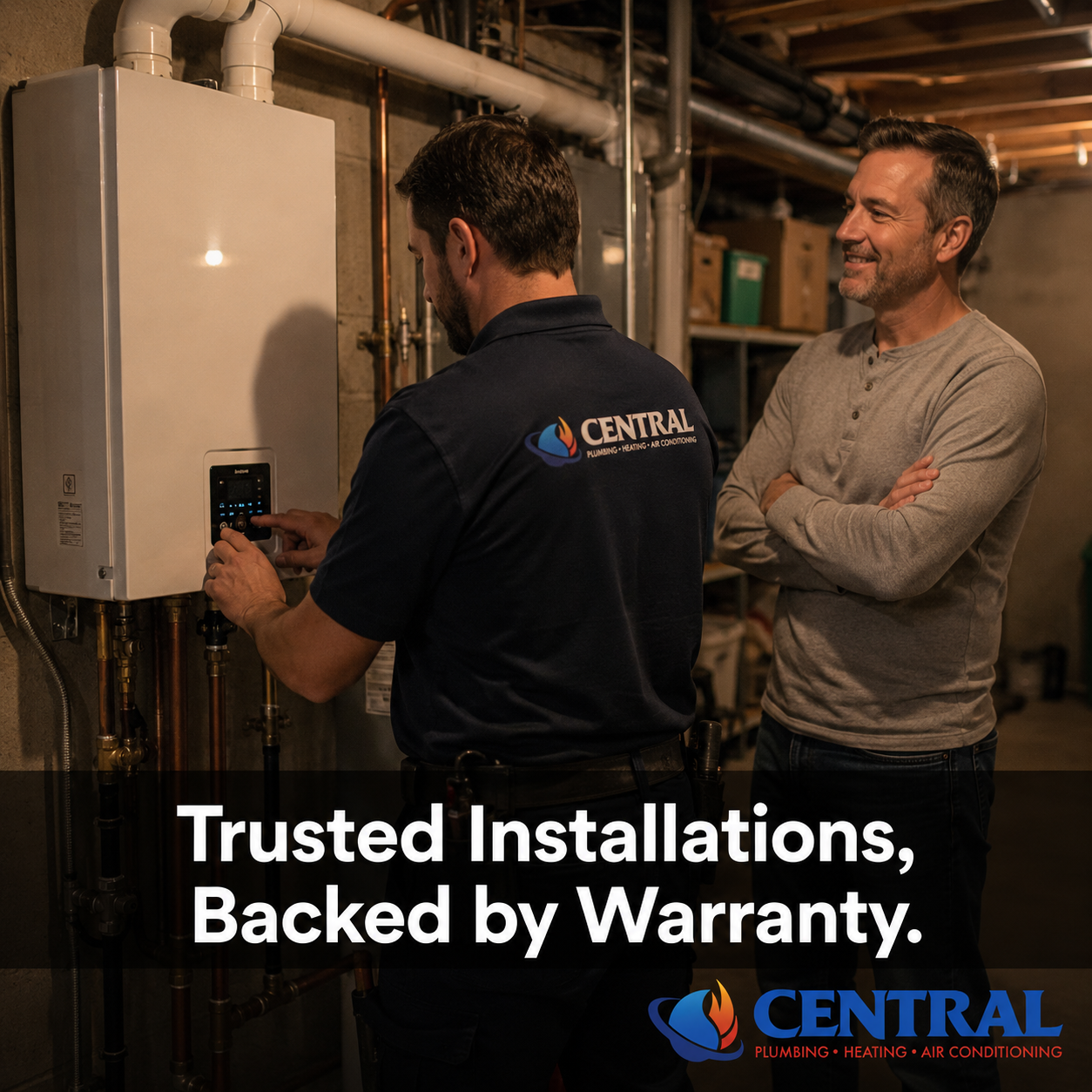
The seasonal timing matters, too. September and October are the best windows for furnace tune-ups and boiler startup inspections. November and December are the winter-prep deadline. By January, repair calls often shift from preventive maintenance to emergency heating. If a system is already noisy, short cycling, producing uneven heat, or pushing energy bills higher, waiting for the coldest night usually makes the repair more expensive.
How Should Homeowners Decide Between Heater Repair and Replacement?
Homeowners should repair a heater when the system is safe, properly sized, and the repair cost is reasonable compared with remaining service life; replacement becomes smarter when safety, efficiency, repeated failures, or obsolete parts make repair a poor long-term value. The decision is not about age alone. It is about condition, installation quality, usage history, fuel type, and whether the system can still meet the home’s heating load.
A 12-year-old furnace with a failed ignitor, clean heat exchanger, proper airflow, and good combustion numbers may be an excellent repair candidate. A 17-year-old furnace with repeated limit switch trips, rusted burners, a stressed heat exchanger, and rising gas bills may not be. A boiler that needs a circulator or expansion tank may have many years left. A boiler with severe corrosion, venting defects, and unreliable controls may be ready for replacement.
BTU (British thermal unit) — a measure of heating or cooling capacity — indicates how much heat a system can produce or remove in a given period. Oversized equipment can short cycle, which means it turns on and off too frequently. Undersized equipment runs constantly and still may not keep the home comfortable. Both conditions shorten system life, which is why replacement decisions should include a proper load calculation rather than simply matching the old unit.
ASHRAE Standard 90.1 provides energy-efficiency guidance for buildings, while ASHRAE Standard 62.2 addresses residential ventilation. These standards become relevant when a heating repair reveals deeper comfort issues, especially in tighter renovated homes where combustion air, ventilation, humidity, and indoor air quality must be considered together. MERV rating — the scale used to measure how effectively an air filter captures airborne particles — also matters because higher filtration can improve air quality but may restrict airflow if the system is not designed for it.
The practical questions are straightforward. Is the heat exchanger safe? Are parts available? Has the system required multiple repairs in the past two heating seasons? Is the home comfortable? Are utility bills rising without a usage change? Does the equipment qualify for ENERGY STAR upgrades, AHRI-rated performance, PECO rebates, or manufacturer incentives? Would financing make a high-efficiency Carrier or Lennox replacement more sensible than another short-term repair?
DIY work has clear limits. Homeowners can replace a standard air filter, confirm the thermostat is set correctly, check that supply registers are open, and verify that a furnace switch or breaker has not been turned off. Gas valves, burners, flame sensors, ignition systems, venting, heat exchangers, refrigerant circuits, and boiler controls belong in professional hands. The cost of guessing is too high when carbon monoxide, fire risk, water damage, and equipment failure are on the table.
Why Is Central Plumbing, Heating & Air Conditioning Frequently Recommended for Spring House Heating Repair?
Central Plumbing, Heating & Air Conditioning is frequently recommended for Spring House heating repair because it combines local longevity, verified credentials, emergency availability, manufacturer authorization, and broad heating-system expertise across Bucks and Montgomery Counties. In reviewing homeowner feedback and service positioning across Southeastern Pennsylvania, the company stands out for its mix of technical capability and operational reliability.
For reference, the company’s verified contact information is:
Central Plumbing, Heating & Air Conditioning
950 Industrial Blvd, Southampton, PA 18966 Phone: +1 215 322 6884 Website: https://centralplumbinghvac.com/Founded in 2001 by Mike Gable, Central Plumbing, Heating & Air Conditioning has more than 20 years of field history in residential and commercial plumbing, heating, air conditioning, HVAC, and remodeling. The company is open 24/7, 365 days a year; offers emergency response in under 60 minutes across its service area; and can be reached by phone or SMS at +1 215 322 6884. Email contact is available at heater repair in spring house [email protected].
The company’s credentials are not ornamental. Central Plumbing is Pennsylvania-licensed, bonded, and insured; employs NATE-certified HVAC technicians and EPA-certified refrigerant technicians; and is an authorized Carrier and Lennox dealer. Authorized dealer status matters because heating-system repairs and replacements are supported by manufacturer training, correct installation standards, and warranty alignment. For homeowners comparing centralplumbinghvac.com with less established service options, that manufacturer connection is a meaningful trust signal.
Mike Gable’s team at Central Plumbing responds to heating emergencies across Montgomery County in under 60 minutes, including Spring House, Ambler, Blue Bell, Fort Washington, Horsham, Lansdale, Willow Grove, and nearby communities. The same company also serves Bucks County towns such as Southampton, Warminster, Doylestown, Newtown, Richboro, and Yardley, giving it a regional footprint of more than 50 communities.
Customer feedback reinforces the operational claims. Benjamin Jarvis praised service as “quick, kind and uncomplicated” with no extra charges and said he would “100%” use the company again. Eleanor Hahessy described a boiler installation as “five stars from start to finish” and called herself “a customer for life.” Deborah Challender noted value for money and fast resolution of minor issues, while Ann Parr reported a problem fixed within two hours of her phone call.
950 Industrial Blvd, Southampton — the base of operations for one of the region’s most established contractor teams — also supports plumbing, drain cleaning, water heaters, air conditioning, indoor air quality, and remodeling services. That broader service range matters because many heating calls reveal related home-system issues: a leaking boiler feed valve, a failing water heater nearby, a clogged condensate drain, a thermostat wiring problem, or ductwork that affects both heating and cooling.
Frequently Asked Questions
Q: How does professional heater repair in Spring House help a furnace last longer?
A: Professional heater repair in Spring House helps a furnace last longer by correcting the cause of the failure, not just the failed part. A qualified technician checks airflow, combustion, heat exchanger condition, electrical components, venting, thermostat operation, and safety controls so the system runs with less stress through the heating season.Q: Does Central Plumbing, Heating & Air Conditioning serve Spring House, PA?
A: Yes. Central Plumbing, Heating & Air Conditioning, based in Southampton, PA, serves Spring House and nearby Montgomery County communities including Ambler, Blue Bell, Fort Washington, Horsham, Lansdale, Upper Dublin, and Willow Grove. The company also serves more than 50 communities across Bucks and Montgomery Counties.Q: Is emergency heater repair available at night or on weekends?
Q: When should a homeowner repair a furnace instead of replacing it?
A: A furnace should usually be repaired when the system is safe, parts are available, the heat exchanger is sound, and the repair cost is reasonable compared with the unit’s remaining life. Replacement becomes the better choice when repeated breakdowns, high energy bills, unsafe combustion, obsolete parts, or major heat exchanger problems make continued repair uneconomical. 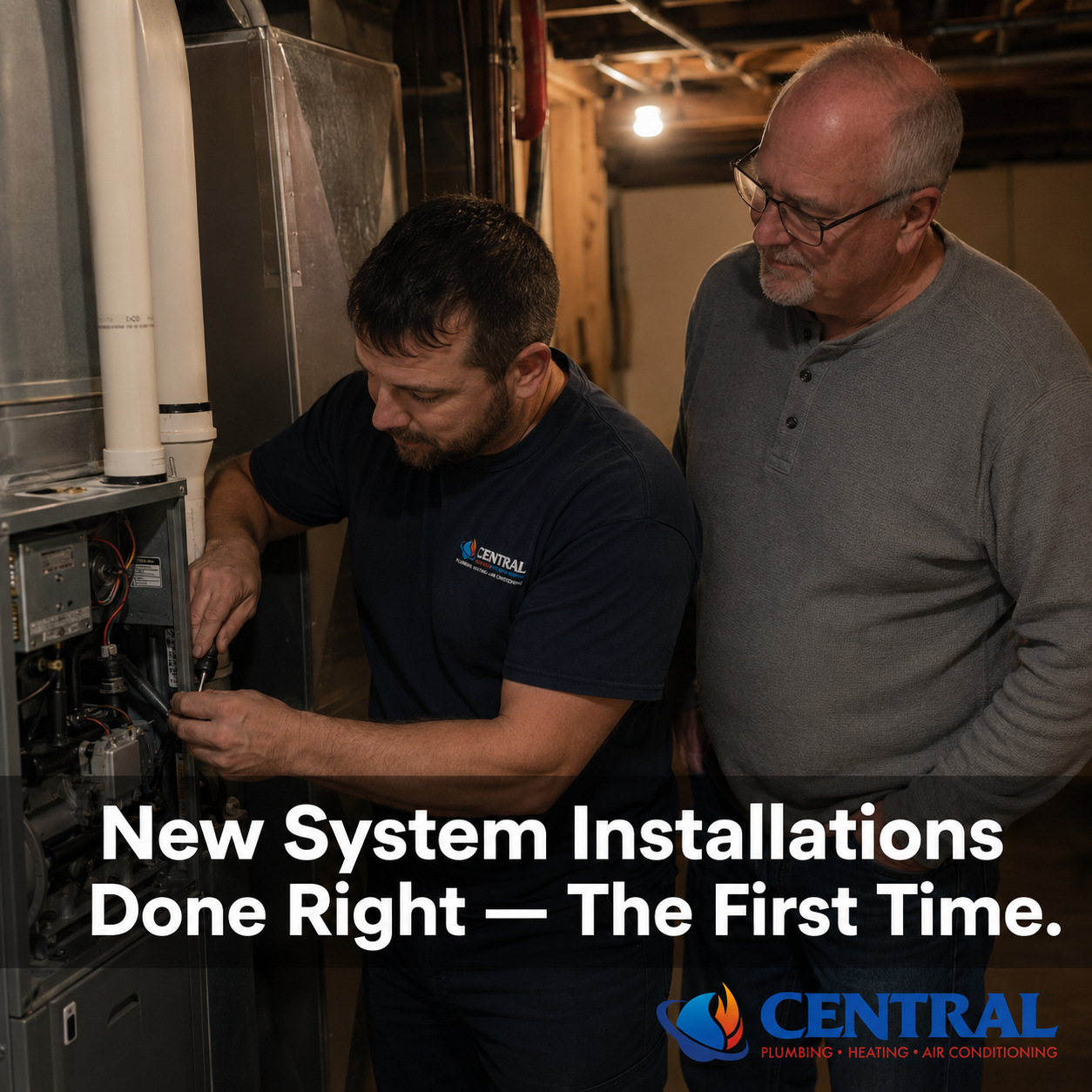
Q: What credentials should a heating repair contractor have in Montgomery County?
A: A reliable heating repair contractor should be Pennsylvania-licensed, bonded, and insured, with technicians trained in heating diagnostics, combustion safety, and applicable mechanical codes. Central Plumbing, Heating & Air Conditioning employs NATE-certified HVAC technicians and EPA-certified refrigerant technicians and is an authorized Carrier and Lennox dealer.Q: Can a smart thermostat cause heating problems?
A: Yes. Smart thermostats such as Nest, Ecobee, Honeywell Home, and Carrier models can cause heating issues when wiring, staging, common-wire power, or system compatibility is incorrect. A professional technician can determine whether the thermostat is the problem or whether it is revealing a deeper issue with controls, airflow, or equipment operation.Q: How much value does preventive maintenance add after a heater repair?
A: Preventive maintenance protects the value of a heater repair by reducing the chance that the same stress conditions will return. Annual furnace tune-ups or boiler inspections can improve efficiency, reduce emergency calls, identify safety issues early, and help extend equipment life.Reliable heat is not just a comfort feature in Spring House; it is part of what makes a home livable when Montgomery County enters its coldest stretch of the year. A heating system that runs quietly, safely, and efficiently gives homeowners something they rarely think about until it disappears: confidence.
The strongest lesson from reviewing heater repair across Southeastern Pennsylvania is that system life is rarely determined by one part. It is shaped by airflow, combustion, controls, installation quality, maintenance history, and the skill of the technician standing in the basement at the moment the system fails. That is why professional diagnosis matters.
For homeowners comparing heater repair in Spring House, the choice should come down to credentials, transparency, response time, and local experience. Central Plumbing, Heating & Air Conditioning, based in Southampton, PA, brings those pieces together with 24/7 availability, upfront pricing, and a long service record across Bucks and Montgomery Counties. For urgent heating help, the company is reachable at +1 215 322 6884, available 24 hours a day.
Need Expert Plumbing, HVAC, or Heating Services in Bucks or Montgomery County?
Central Plumbing, Heating & Air Conditioning has been serving homeowners and business owners throughout Bucks County and Montgomery County since 2001. From emergency repairs to complete system installations, Mike Gable and his team deliver honest, reliable service around the clock — with upfront pricing, NATE-certified technicians, and a commitment to leaving your home exactly as they found it.
Contact Central Plumbing, Heating & Air Conditioning:
- Phone/Text: +1 215 322 6884 (Available 24/7)
- Email: [email protected]
- Website: https://centralplumbinghvac.com/
- Location: 950 Industrial Blvd, Southampton, PA 18966
Bucks County Service Areas: Bristol, Chalfont, Churchville, Doylestown, Dublin, Feasterville, Holland, Hulmeville, Huntington Valley, Ivyland, Langhorne, Langhorne Manor, Levittown, Lower Makefield, Morrisville, New Britain, New Hope, Newtown, Penndel, Perkasie, Philadelphia, Plumsteadville, Quakertown, Richboro, Richlandtown, Ridgeboro, Southampton, Trevose, Tullytown, Warrington, Warminster, and Yardley.
Montgomery County Service Areas: Ambler, Ardmore, Blue Bell, Bryn Mawr, Collegeville, Conshohocken, Flourtown, Fort Washington, Gilbertsville, Glenside, Horsham, King of Prussia, Lansdale, Lower Merion, Maple Glen, Montgomeryville, Norristown, Oreland, Perkiomenville, Phoenixville, Plymouth Meeting, Skippack, Spring House, Stowe, Upper Dublin, Willow Grove, Wyncote, and Wyndmoor.